AI Lead Scoring for Small Business That Works
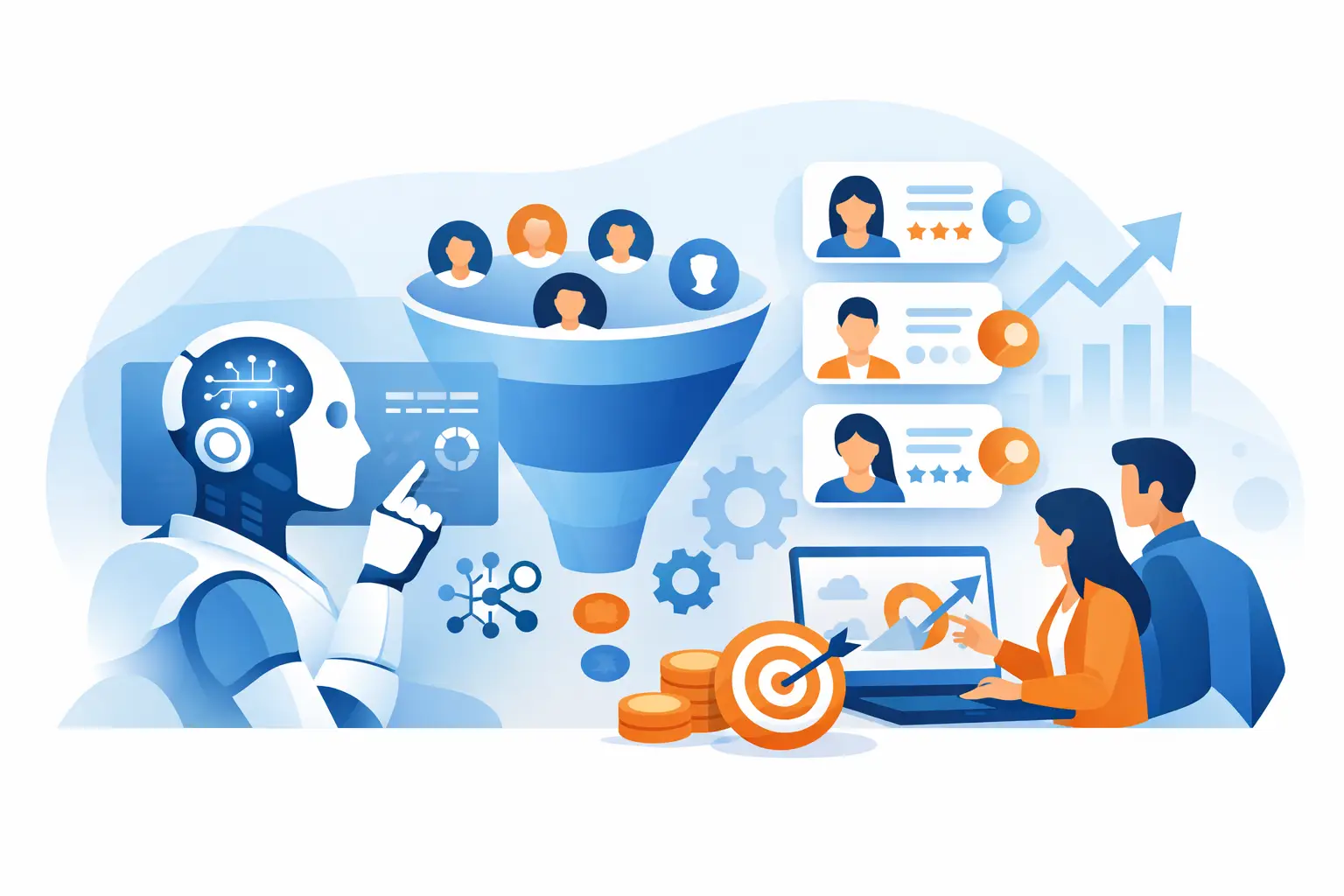
A missed lead rarely looks dramatic in the moment. It looks like a text you meant to answer after lunch, a voicemail you forgot to return, or a web inquiry that sat untouched until the next morning. For small teams, that is exactly why ai lead scoring for small business matters. It helps you stop treating every inbound lead the same and start focusing on the people most likely to book, buy, or show up.
If your business lives on inbound demand, speed is money. The faster you identify serious buyers, the faster you can respond with the right message. That does not mean ignoring everyone else. It means giving your best attention to the leads most likely to turn into revenue while automation keeps the rest moving.
What ai lead scoring for small business actually means
At a practical level, lead scoring is just prioritization. Every new prospect gets evaluated based on signals that suggest buying intent. AI improves that process by looking at more than one static rule.
Old-school lead scoring usually depends on a few manual triggers. Maybe a lead gets 10 points for filling out a form, 5 for opening an email, and 20 for requesting a quote. That can work, but small businesses rarely have the time to build, maintain, and refine those systems. Most end up with either no scoring at all or a messy spreadsheet that nobody trusts.
AI lead scoring takes the same goal and makes it more useful in the real world. Instead of relying only on fixed point values, it can weigh patterns like response speed, inquiry type, message content, source quality, repeat engagement, appointment interest, and timing. In a small business setting, that matters because the difference between a tire-kicker and a ready-to-buy customer often shows up in conversation behavior, not just form fields.
A med spa lead who asks about next available appointments is different from someone casually asking for pricing. A roofing prospect texting photos after a storm is different from someone gathering estimates for next season. A recruiter getting a candidate who responds instantly and confirms availability is dealing with a hotter lead than one who goes silent after first contact. AI can help surface that difference early.
Why small businesses benefit more than big teams
Enterprise companies use lead scoring to sort huge volumes. Small businesses need it for a different reason. They cannot afford wasted follow-up.
If you have one office manager, one salesperson, or a founder handling leads between jobs, every minute matters. You do not need more dashboards. You need a faster way to know who deserves an immediate reply, who needs a nudge, and who can wait until later in the day.
That is where ai lead scoring for small business earns its keep. It reduces hesitation. Instead of asking, Who should I call first, your system gives you a practical order of operations. That clarity is valuable when your pipeline depends on staying responsive without hiring more staff.
There is also a second advantage. Small businesses often communicate through phone calls and text messages, where buyer intent shows up quickly. AI can read those engagement signals better than a manual process can. If a lead replies within two minutes, asks specific questions, and keeps the conversation moving, that lead should not sit in the same bucket as a cold inquiry from three days ago.
The signals that matter most
Not every lead score is worth trusting. Good scoring depends on useful signals, not vanity metrics.
For most service and appointment-based businesses, the strongest signals are speed of reply, message intent, appointment or quote requests, repeat engagement, missed call follow-up, time of inquiry, and lead source quality. A person who texts after business hours and gets an instant response may be far more convertible than someone who fills out a general form and never answers again.
Intent language matters too. Phrases like can I come in today, how soon can you start, what do you charge for this specific service, or are you available this week usually indicate real buying motion. AI can help flag that language and move those conversations to the top.
But there is a trade-off. AI is only as useful as the behavior it can observe. If your lead data is scattered across missed calls, sticky notes, inboxes, and one employee's personal phone, the scoring will be weaker. You do not need an enterprise stack to fix that, but you do need one place where inquiries are captured and conversations are organized.
Where lead scoring usually goes wrong
The biggest mistake is thinking scoring alone fixes conversion. It does not. It only tells you where to focus. If your response time is still slow, your scripts are weak, or nobody follows up, a lead score will not save the deal.
Another common problem is overcomplication. Small businesses do not need a 40-variable model and a weekly analytics meeting. They need a system that works under pressure. If your team cannot tell within seconds why a lead is high priority, the setup is too complex.
There is also the risk of false confidence. Some leads look hot and never close. Others start quiet and convert after a strong follow-up sequence. That is why the best scoring systems are dynamic. Scores should change as the conversation changes. A lead who ignores your first reply should cool down. A lead who comes back asking to book should move up immediately.
This is where focused tools often outperform bloated platforms for smaller operators. A simple, mobile-first system that captures inbound texts, replies instantly, scores interest, and prompts the next action is often more useful than a giant CRM your team barely opens.
How to use AI lead scoring in a small business without slowing down
Start with the handoff between inquiry and first response. That is the moment where money gets won or lost. If a new lead comes in, the system should acknowledge it right away, keep the conversation active, and assign some level of urgency.
Then make sure the score connects to action. A high-scoring lead should trigger immediate follow-up. A medium-priority lead might get a drafted text, a reminder, or a same-day callback. A low-priority lead should still receive a response, but not at the cost of delaying a hotter opportunity.
This sounds obvious, but many businesses stop at labeling. They mark a lead as hot without changing behavior. The whole point is to improve response order and follow-up quality.
For example, a home service company might route high-intent quote requests to the owner right away while automated messaging keeps lower-intent inquiries engaged until someone is free. A real estate agent might prioritize prospects asking for a showing over general market questions. A gym might move trial-ready prospects to the top while placing information gatherers into a lighter nurture flow.
The most effective setup is not the one with the most features. It is the one your team will actually use on busy days.
What to look for in an AI lead scoring tool
Small businesses should be ruthless here. If the tool requires a long implementation, a CRM migration, or technical setup that drags on for weeks, it is already working against your sales cycle.
Look for a system that captures inbound inquiries automatically, especially from calls and texts, responds fast, and keeps everything in one view. The scoring should feel obvious, not mysterious. You should be able to see who is most likely to convert and why that lead is getting attention now.
Mobile access matters more than many vendors admit. A lot of small-business selling happens away from a desk. If you cannot review, reply, and prioritize from your phone, adoption will drop.
It also helps when the platform does more than assign a score. Drafted follow-ups, reminders, conversation prompts, and next-best-action suggestions can turn scoring into actual revenue. Chesera is built around that kind of practical execution - not as a heavyweight CRM replacement, but as a focused conversion layer for teams that need to respond faster and close more from inbound demand.
Is ai lead scoring for small business worth it?
If your business gets only a handful of leads each month and every one receives immediate personal attention, maybe not yet. Manual follow-up may be enough.
But once lead volume grows, response times slip, or multiple people touch inquiries, scoring starts paying for itself quickly. Not because it feels advanced, but because it cuts decision time. It shows your team where revenue is most likely to come from next.
That is the real value. AI lead scoring is not about replacing sales judgment. It is about giving small businesses a faster way to apply that judgment when the phone is ringing, texts are coming in, and nobody has time to sort the pile manually.
If you depend on inbound leads, your best prospects are telling you who they are all day long. The businesses that win are the ones set up to notice fast enough to act.