Plumber Missed Call Recovery That Books More Jobs
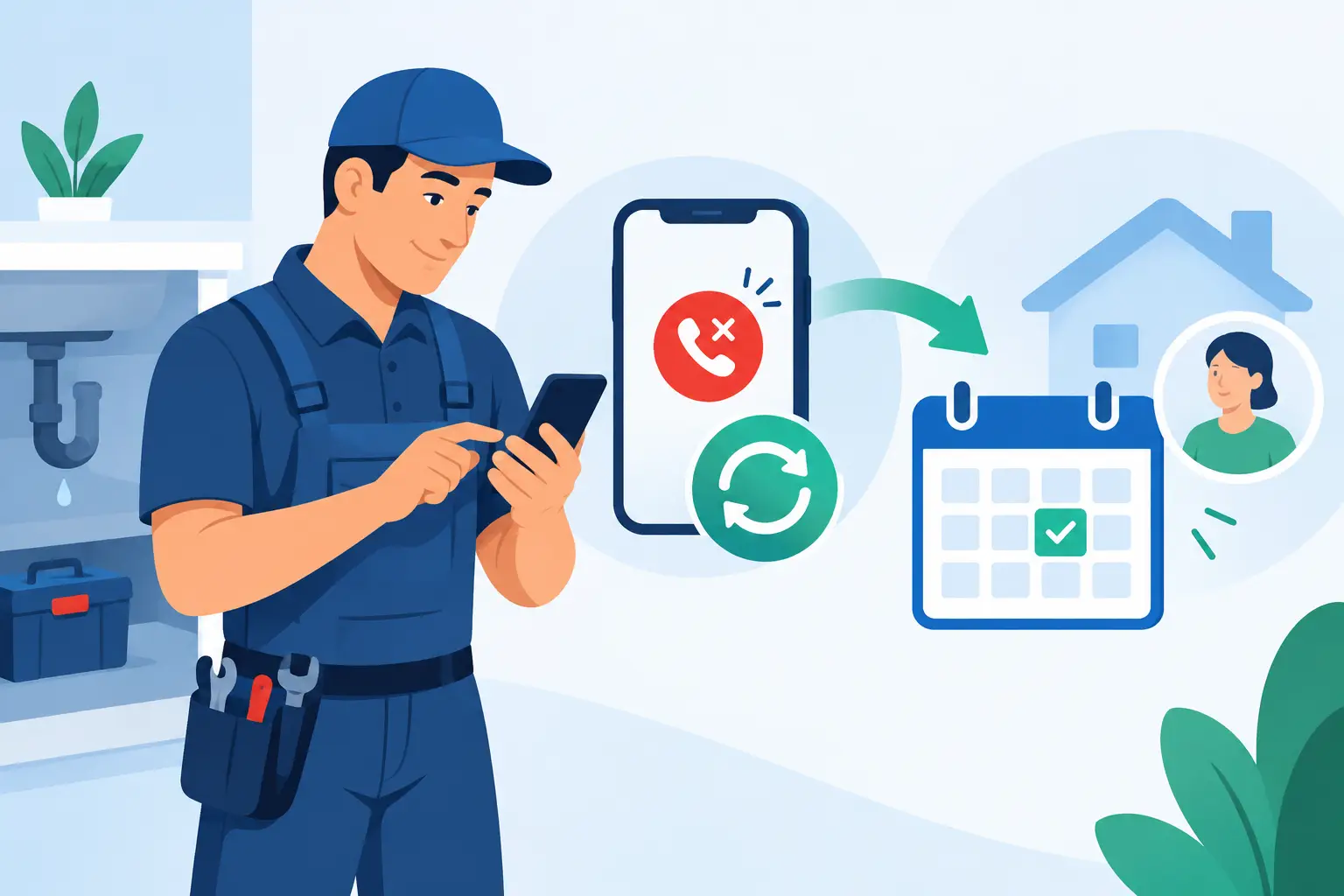
A homeowner with a leaking water heater is not leaving one voicemail and waiting patiently. They are calling the next plumber, then the next. Plumber missed call recovery is the system that gets a conversation started after you cannot answer - before that urgent job becomes someone else’s revenue.
The problem is not that your team misses calls. You are under sinks, driving between jobs, collecting payment, or helping the customer in front of you. The problem is treating a missed call as a dead lead. Every unanswered inbound call should trigger a fast, useful response that gives the prospect a reason to stop shopping and reply.
Why a missed plumbing call costs more than one job
A missed call is rarely just a missed call. It may be an emergency repair, a replacement quote, a maintenance-plan customer, or a homeowner who will refer you if the experience feels easy. When no one responds, the prospect does not see a busy, in-demand plumbing business. They see a company that might not show up.
Speed changes the outcome. A text sent within moments confirms that the inquiry was received and gives the caller a low-effort way to continue. Unlike a callback that may go unanswered again, text lets the customer respond when they are standing in a flooded utility room, sitting in a meeting, or comparing estimates.
This is especially important for high-intent calls. Someone searching for drain cleaning, burst pipe repair, sewer backup help, or water heater service usually has a real problem now. They are not asking for a brochure. They want to know three things: can you help, how soon can you get there, and what happens next?
The plumber missed call recovery workflow
The best recovery process is short enough to run every day, even during the busiest season. It should not depend on someone remembering to check voicemail after dinner. It should move the lead from missed call to active conversation automatically, then give your team a clear next action.
Send an immediate text, not a generic apology
Your first text needs to sound like a real plumbing company, not an automated black hole. Confirm that you saw the call, state that you can help, and ask one simple qualifying question.
For example: “Sorry we missed your call. This is [Company]. What plumbing issue are you dealing with, and what is the service address? We will check the fastest available time.”
That message does several jobs at once. It reassures the customer, collects information, and signals that scheduling is the goal. Avoid asking five questions in the first message. A homeowner with water on the floor does not want to complete an intake form by text.
For after-hours calls, set expectations honestly. Do not promise immediate dispatch if you do not offer it. A better message is: “We received your call. If this is an active leak, shut off the nearest water valve if it is safe to do so. Reply with your address and issue, and our on-call team will confirm availability.”
Make the next step easy to understand
Once a prospect replies, the conversation must move forward. Ask for the few details that affect dispatch: the issue, address, preferred timing, and whether water or sewage is actively causing damage. Then offer a specific next step.
“Can have a technician there between 2 and 4 PM. Would you like that window?” beats “When are you available?” Specificity reduces back-and-forth and gets more jobs on the board.
Pricing requires judgment. For straightforward services, an upfront service-call fee or clearly stated diagnostic process can build trust. For complex repairs, do not force a quote by text just to keep the lead warm. Explain that a technician needs to inspect the issue, then focus on booking the visit. Fast response should not mean careless promises.
Follow up without chasing forever
Many recovered leads will not reply to the first text. They may be dealing with the immediate problem, talking with a spouse, or already on another call. That is why one response is not a recovery system.
Use a short follow-up sequence over the next day or two. Keep each message useful and direct. Your second message might say: “Just checking in - do you still need help with your plumbing issue? We have availability today.” A final message can create a clean decision point: “We are closing out this request for now. Reply HELP if you still need a plumber and we will get you scheduled.”
Do not send repeated texts for a week. That does not feel persistent. It feels desperate. The right number of follow-ups depends on the service type and urgency, but two or three timely attempts are usually enough to recover legitimate opportunities without irritating people.
Build messages around the jobs you want more of
Not every plumbing lead should get the same reply. A missed call about an overflowing toilet needs urgency. A caller asking about a tankless water heater installation may need a consultative path. Recovery works better when your texts match the likely job.
For emergency work, lead with availability and safety. For drain or sewer issues, ask whether there is a backup and whether multiple fixtures are affected. For water heater calls, ask whether the unit is leaking, producing hot water, or completely out. Those answers help you prioritize while showing the customer you understand the situation.
For larger replacement jobs, do not let the missed call turn into a vague “call us back when you can.” Offer a site visit or estimate window. A text such as “We can inspect the water heater and provide replacement options tomorrow morning or afternoon. Which works better?” keeps the conversation moving toward revenue.
Make ownership impossible to ignore
Automation can send the first response, but someone still needs to own the lead. This is where many shops lose recovered calls. The text goes out, the customer responds, and the message sits because everyone assumes someone else is handling it.
Create a simple rule: every new missed-call lead has one owner and one status. New, contacted, qualified, scheduled, lost, or follow-up required is enough for most small plumbing teams. You do not need a massive CRM project to stop leads from disappearing. You need visibility and accountability.
Review unanswered texts twice a day. A five-minute check at midday and another before closing can recover jobs that would otherwise fade out. If your team is small, mobile-first lead handling matters because the person able to respond may be in the field, not behind a desk.
Chesera is built for this exact gap: it can turn inbound texts into lead records, send instant replies, organize follow-ups, and show your team who needs attention next. That gives a busy plumbing operation a conversion layer without asking it to replace every tool it already uses.
Track the numbers that expose lost revenue
Do not judge missed-call recovery by how many texts you send. Judge it by whether it creates booked work. Start with four numbers: missed inbound calls, first-response time, reply rate, and appointments booked from missed calls.
Then look at the reason codes for leads that did not convert. Were you too slow? Did the caller need service outside your area? Was pricing the issue? Did you lack same-day availability? The answers tell you whether your problem is follow-up, operations, or lead quality.
There is a trade-off here. If you respond instantly to every call but cannot support the volume, you may create frustrated prospects and stressed technicians. Set service areas, operating hours, and escalation rules that match reality. Recovery is not about promising everything. It is about responding faster than competitors with a clear, credible next step.
Train for conversations, not scripts
Your office staff and technicians do not need to sound like call-center agents. They need to recognize a live opportunity and guide it toward scheduling. Give them a few approved message frameworks, but let them use normal language.
The strongest text conversations are short, confident, and practical. They acknowledge the problem, confirm the next action, and remove friction. They do not over-explain your company history or force the prospect through a long qualification process before offering help.
A missed call does not have to be the end of a lead. Treat it as the moment your speed, clarity, and follow-through become visible. The plumber who texts back first with a real path to service often wins the job - even when they were not the first number the homeowner called.