SMS Automation vs CRM for Faster Lead Response
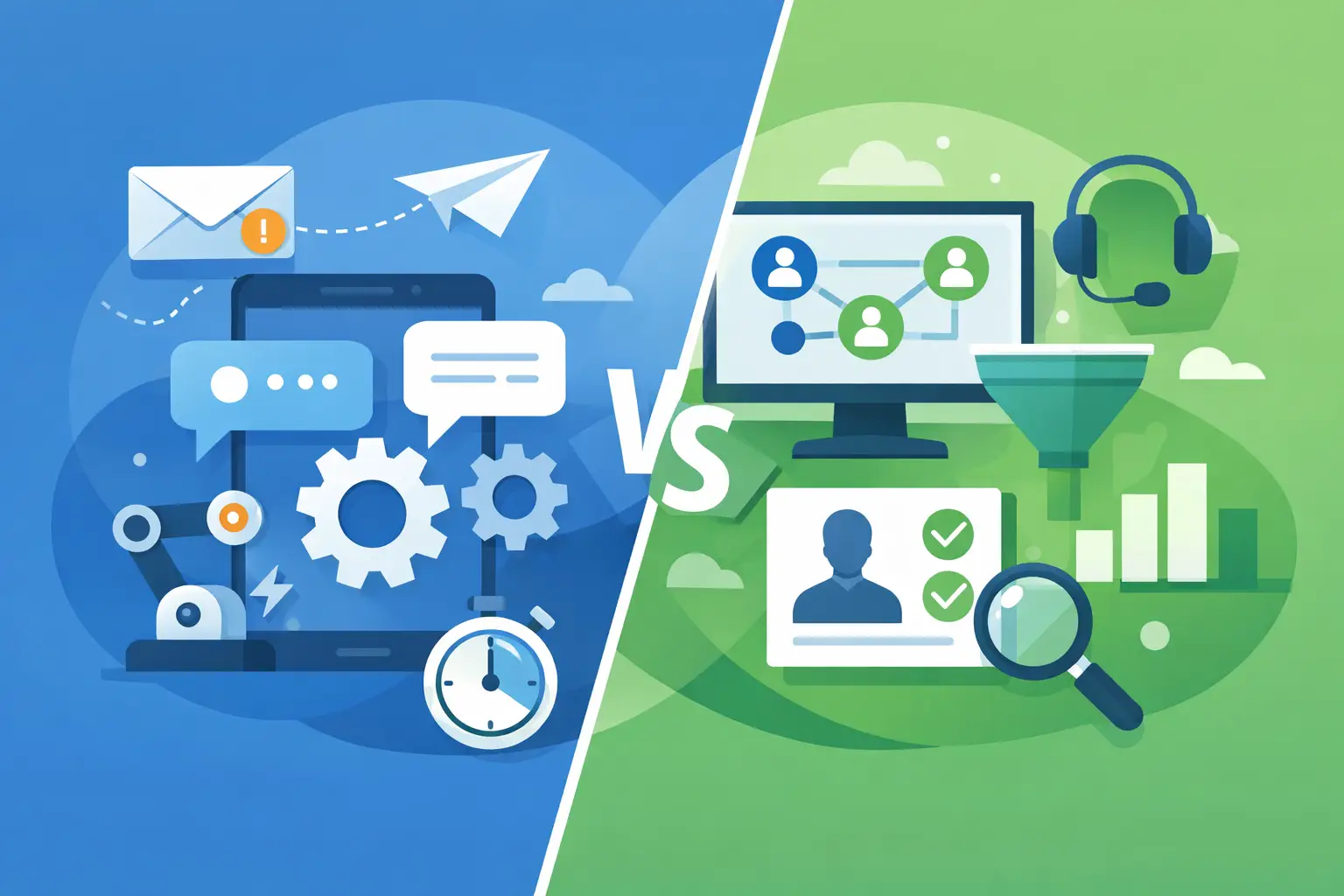
A new lead does not care that your CRM is fully configured. They care whether someone answers while they are still comparing quotes, scrolling listings, or sitting in their car after requesting information. That is the real decision behind sms automation vs crm: do you need a database to manage your business, or a faster way to turn conversations into revenue?
For most lead-driven small businesses, the answer is not choosing one tool forever. It is knowing which job each tool should own. A CRM can be valuable for tracking the customer journey. SMS automation is built for the high-pressure moment before that journey even starts - when a prospect needs a response now.
SMS Automation vs CRM: The Core Difference
A CRM is a system of record. It stores contacts, tracks pipelines, logs activities, assigns tasks, and gives managers visibility into sales performance. If you have a long sales cycle, multiple team members, recurring clients, or detailed reporting requirements, that structure matters.
SMS automation is a system of action. It receives an inbound text, identifies it as a lead, sends an immediate reply, keeps the conversation moving, and prompts the right follow-up. Its job is not to create an elaborate account history. Its job is to make sure a hot inquiry does not go cold because nobody replied.
That difference changes how each tool feels in practice. A CRM often asks your team to enter information, update stages, create tasks, and work through dashboards. SMS automation should reduce the work between an inquiry and a real conversation. For an insurance agent responding to a quote request or a contractor replying to a homeowner, fewer steps usually means fewer lost opportunities.
Neither category is automatically better. But treating a CRM as your speed-to-lead solution can create a costly gap. A lead comes in, the CRM records it correctly, and then it waits. Accurate waiting is still waiting.
Where SMS Automation Wins More Leads
Text messaging is effective because it meets prospects where they already are. People may ignore a call from an unknown number or leave an email for later. A short, relevant text gives them an easy way to respond without committing to a long conversation.
Automation matters because speed is difficult to maintain manually. You may be with a client, driving to a job, handling a closing, or simply off your phone for 20 minutes. Those are normal working conditions, not failures. The problem is that inbound leads do not pause their buying process while you catch up.
An SMS automation platform can respond immediately with a useful first message, such as confirming the request, asking one qualifying question, or offering the next available appointment. The prospect gets acknowledgment right away. Your business stays in the conversation. Then you can step in with context instead of starting from zero.
This is especially useful when leads arrive outside normal hours. A med spa inquiry at 9:30 p.m., a real estate question on a Saturday, or an emergency plumbing request at dawn should not sit untouched until the next shift. An automatic response does not replace a human closer. It protects the lead until a human can close.
The best SMS automation also creates focus. Instead of scanning a crowded inbox and guessing who needs attention, you can see which conversations are active, which leads are qualified, and who needs a follow-up. That makes a small team operate with more consistency without adding another coordinator.
Where a CRM Still Earns Its Place
A CRM becomes more useful after the first conversation turns into an actual sales process. If your team needs to track inspections, proposals, policy applications, financing steps, client documents, or repeat service schedules, a CRM brings order to the work.
It is also the stronger choice when reporting is central to how you operate. A growing home services company may need to compare lead sources, conversion rates by rep, revenue by service line, and pipeline value by month. A CRM is designed to hold that data over time.
The trade-off is friction. Many small businesses buy a CRM because they want control, then use only a fraction of it because adoption takes effort. The owner logs in occasionally. Reps update records after the fact, if at all. Follow-up tasks pile up. The system contains the lead, but it does not necessarily create the response.
That is why a CRM should not be judged solely by its feature list. Ask whether your team will use it during the busiest part of the day. If the answer is no, it cannot be your only defense against missed inquiries.
When SMS Automation Should Come First
Put SMS automation first if your biggest revenue leak is slow response. That is common for independent agents, local service businesses, studios, clinics, dealerships, and any operator who depends on inbound calls, forms, ads, or referral texts.
You likely need an SMS-first conversion layer if leads are reaching your personal phone, messages get buried in shared inboxes, nobody owns follow-up after hours, or prospects regularly ask for a quote and disappear before you reply. Those are conversation problems, not database problems.
A focused tool can also make more sense when you are not ready for a CRM migration. Moving contacts, building pipelines, training staff, and changing workflows can take weeks. If leads are being lost this week, start with the bottleneck that costs money now: response time.
Chesera is built for this moment. It gives businesses a dedicated number, turns inbound texts into organized lead records, sends instant replies, and helps users see who needs attention next. It is not trying to replace every system in your business. It is built to help you respond before the opportunity moves on.
When You Need Both Tools
The strongest setup for many businesses is simple: SMS automation handles immediate engagement, while the CRM manages the broader customer lifecycle. The text platform starts the conversation. The CRM becomes the long-term home for qualified opportunities and customers.
This approach prevents an all-or-nothing decision. You do not need to force frontline lead response into a heavyweight workflow, and you do not need to expect a texting tool to manage every operational detail after the sale.
For example, a mortgage broker can use automated texting to respond to a rate inquiry in seconds, collect the basic details, and schedule a call. Once the prospect is qualified, the loan workflow and documentation can live in the CRM. A salon can instantly answer a new appointment inquiry by text, then use its existing system to manage client history and future bookings.
The handoff point depends on your business. If a lead needs a fast answer, keep the first interaction close to the SMS workflow. If they need complex documents, multiple stakeholders, or a multi-month process, move the qualified opportunity into the CRM once momentum is established.
How to Make the Choice Without Overthinking It
Start by measuring the time between an inbound lead and your first useful response. Not the time until it appears in software. Not the time until someone marks it as contacted. Measure the moment a prospect receives a relevant message from your business.
Then look at your current process honestly. If leads are already answered quickly and your issue is forecasting, account management, or team reporting, improve your CRM use. If your team is missing inquiries, replying late, or forgetting to follow up, fix the response layer first.
Keep the first automated message short and useful. Confirm that you received the request, set an expectation, and ask a question that moves the sale forward. Do not send a generic wall of text. A prospect who wants an auto insurance quote, a roof estimate, or a consultation wants progress, not a brochure.
Also build a clear rule for human follow-up. Automation earns the first response, but people win the deal by answering questions, handling objections, and asking for the appointment or next step. The goal is not to automate away your sales team. The goal is to give them fewer cold leads and more live conversations.
Your next lead will not judge your tech stack. They will judge whether you answered before the competitor did. Build your process around that moment, and the rest of your systems can finally do their job.