SMS Lead Conversion Software That Closes Faster
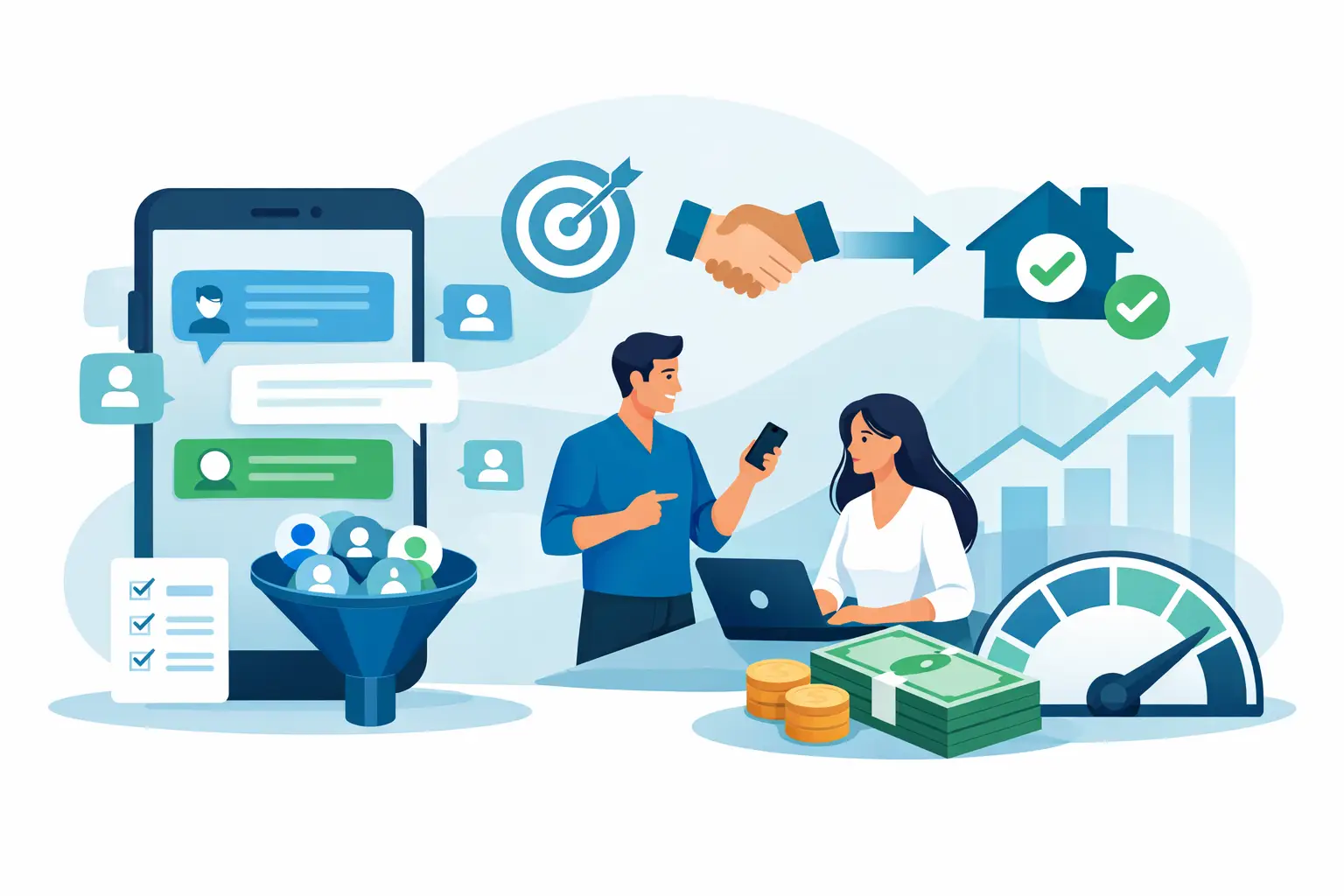
A lead comes in at 2:17 p.m. You are on a job, in a closing appointment, or between clients. By 3:02, that prospect has already texted someone else. That is the real job of sms lead conversion software - not just sending messages, but protecting revenue in the gap between interest and response.
For lead-driven businesses, speed is not a nice extra. It is the difference between a booked estimate and a dead inquiry. Most owners already know they should follow up faster. The problem is execution. Calls get missed. Texts land on personal phones. Front-desk staff gets buried. Leads sit in a CRM while nobody actually starts the conversation. Software that shortens that delay has a direct impact on close rate.
What sms lead conversion software actually does
At a basic level, sms lead conversion software captures inbound text conversations, responds immediately, and keeps the lead moving. The stronger platforms do more than blast reminders or send one-off marketing messages. They act as a conversion layer between inquiry and sale.
That distinction matters. A lot of tools claim to help with leads, but many are built for storage, reporting, or broad marketing automation. Those functions can be useful, but they do not fix the first problem most small businesses have: no one replied fast enough.
The best systems are built around a simple chain. A lead texts your business number. The platform turns that message into a usable lead record. It sends an instant response, routes the conversation, surfaces the highest-priority prospects, and prompts the next follow-up before momentum dies. That is not the same as a full CRM, and for many small teams, that is exactly the point.
Why response time changes the sale
Most inbound leads are not loyal yet. They are comparing options, checking availability, and looking for whoever makes it easiest to take the next step. If your reply comes an hour later, you are often no longer competing on quality or price. You are competing against the business that answered first.
Text is especially powerful here because it matches how people already behave. They do not always want to pick up the phone. They do want a quick answer, a quote range, an appointment time, or a next step they can handle in seconds. SMS gets read quickly, and it reduces the friction that kills conversions.
This is why sms lead conversion software tends to outperform slower, more complicated workflows. It compresses the time between intent and contact. That is the moment where the highest value sits.
The real cost of using the wrong tool
A lot of businesses try to solve this with a combination of shared inboxes, personal phones, manual texting, and a CRM that was never designed for rapid response. On paper, that looks manageable. In practice, it creates blind spots.
Leads go missing when one employee thinks another already replied. Follow-ups become inconsistent because nobody knows which prospects have gone cold and which are ready to close. Managers end up with data on pipeline stages but very little control over actual response behavior.
Heavyweight platforms add another problem: adoption. If your team needs training, migration, custom setup, and daily discipline just to answer leads faster, you are solving one problem by creating three more. Small businesses usually do better with tools that are focused, mobile-friendly, and easy to use under pressure.
What to look for in sms lead conversion software
The first requirement is immediate auto-response. Not a generic confirmation that feels robotic, but a fast first touch that acknowledges the inquiry and keeps the prospect engaged until a human or AI-assisted follow-up takes over.
The second is a dedicated business number. When texts are scattered across personal devices, accountability disappears. A dedicated number keeps conversations organized, professional, and visible to the team.
The third is automatic lead capture. If a text comes in, it should instantly become a record you can act on. No copying and pasting. No hoping someone logs it later. Manual entry is where good leads quietly die.
Lead prioritization also matters. Not every inquiry deserves the same urgency, and not every team has the same bandwidth. Good software helps you identify who is hottest, who has gone quiet, and who needs a nudge today. That kind of triage is where AI can be genuinely useful.
Follow-up drafting is another feature that sounds small until you use it. Most lost deals are not lost because the owner had no idea what to say. They are lost because nobody said it in time. Suggested replies and next-step prompts reduce hesitation and keep your pipeline moving.
Finally, mobile usability is non-negotiable. If your business happens in the field, at appointments, or between locations, desktop-first software slows you down. The response tool has to work where your day actually happens.
Who benefits most from SMS-first conversion
Any business that depends on inbound leads can benefit, but the impact is strongest where prospects are shopping quickly and expect a near-immediate reply. Real estate agents, mortgage brokers, insurance teams, med spas, contractors, clinics, auto dealers, recruiters, and home service companies all live in that reality.
Take a roofer during storm season. Quote requests hit all day. Calling every lead back immediately is unrealistic. A fast text response that confirms service area, asks one or two qualifying questions, and tees up the next action can save deals that would otherwise vanish.
Or consider a med spa. A prospect asks about pricing or openings while comparing providers. The winner is often not the brand with the prettiest site. It is the one that starts the conversation first and keeps it easy.
Where SMS software fits alongside a CRM
This is where buyers often get confused. They think they need one system to do everything. Sometimes they do. More often, they do not.
A CRM is useful for long-term relationship management, reporting, and broader pipeline tracking. But many small businesses are underusing their CRM while still losing leads at the top of the funnel. That is because storing lead data is not the same as converting the lead.
Sms lead conversion software fills that gap. It is built for the first minutes and first follow-ups that shape the entire opportunity. If your current stack already handles reporting and customer history, a focused SMS conversion layer can be the faster, cheaper fix.
That is one reason platforms like Chesera appeal to smaller, lead-dependent teams. They do not force a full operational overhaul just to improve response time. They solve the part of the problem that is directly tied to revenue leakage.
Common mistakes when choosing a platform
The biggest mistake is buying based on feature volume instead of speed to value. More features do not automatically mean more closed deals. If the platform is hard to launch, hard to learn, or hard to use from a phone, your team will revert to old habits.
Another mistake is treating SMS like a marketing channel only. Promotional texting has its place, but lead conversion is a different job. You need software that handles active conversations, not just outbound campaigns.
It also pays to be realistic about automation. Full automation sounds attractive, but some businesses need a mix of instant replies, AI assistance, and human judgment. The best setup is not always the one with the most automation. It is the one that keeps conversations moving without creating awkward handoffs or generic messages.
How to know if you need sms lead conversion software now
If you are missing calls, replying late, handing leads across multiple people, or relying on memory for follow-up, you likely already need it. If your inbound volume is strong but your close rate feels soft, that is another signal. The market often tells you there is demand before your internal process is ready to capture it.
You should also pay attention to where prospects naturally respond. If people text your business anyway, ask for pricing by message, or go quiet after a missed call, your buyers are telling you the channel they prefer. Good operators pay attention to that and adapt quickly.
The key question is simple: how much revenue are you losing between first contact and first response? Once that number gets uncomfortable, the software decision gets easier.
The best tool here is not the one with the biggest promise. It is the one your team can start using fast, from anywhere, without friction, and with a clear line to more conversations, more appointments, and more deals. If your business lives or dies on inbound leads, faster follow-up is not an efficiency play. It is a sales strategy.