How to Turn Texts Into Leads That Close
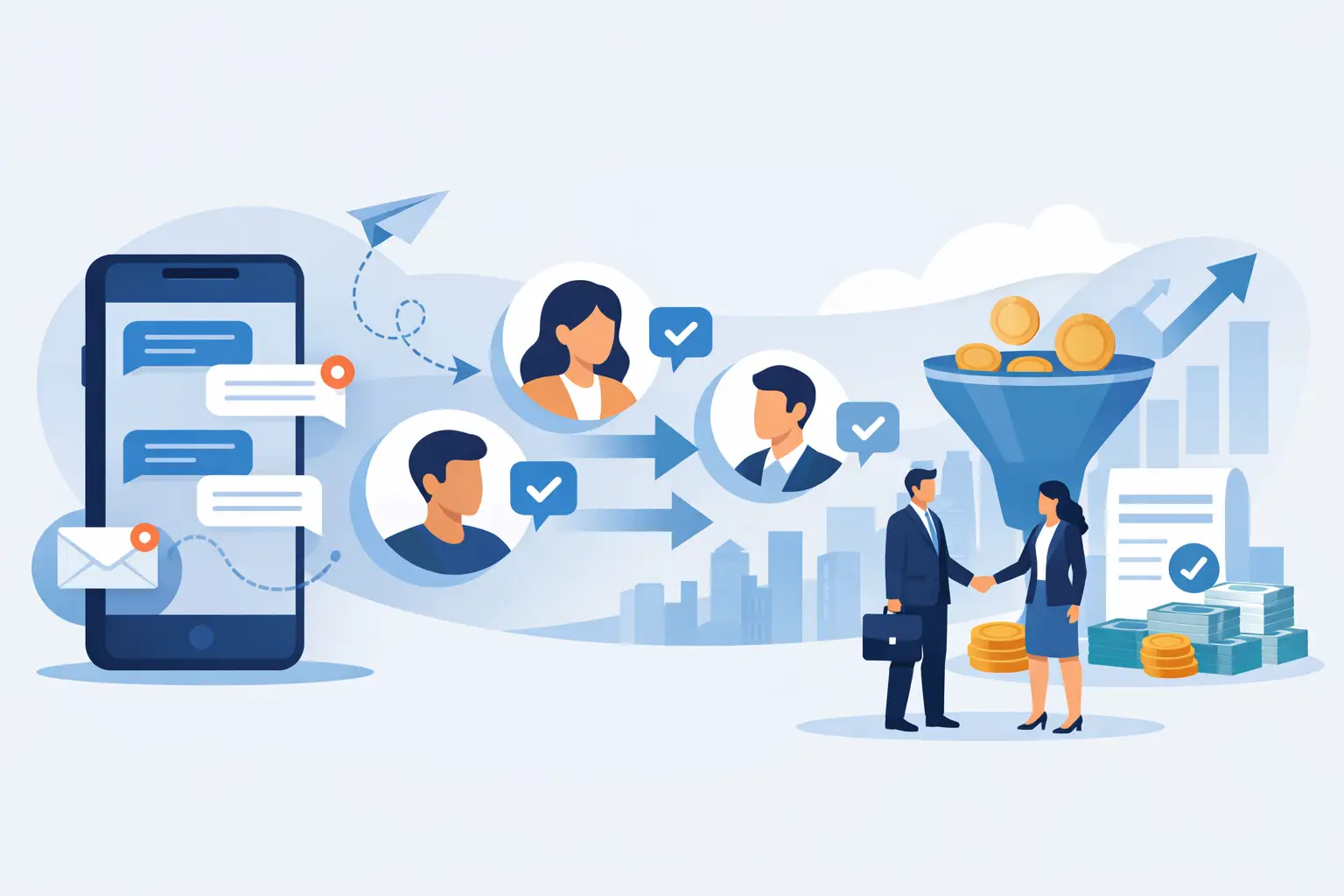
A lead texts your business at 8:14 PM asking, "Can you give me a quote?" If that message sits unanswered until morning, you are not just late - you are competing with every business that replied in two minutes. That is the real issue behind how to turn texts into leads. It is not about collecting more messages. It is about turning inbound intent into a live conversation before attention disappears.
For lead-driven businesses, texting is no longer a side channel. It is often the first serious buying signal. People text when they want speed, convenience, and low-friction answers. They do not want to fill out long forms, wait on hold, or get pushed into a back-and-forth email chain. If your business treats texts like casual communication instead of active sales opportunities, you will lose deals to faster operators.
Why texts are such high-intent opportunities
A text is different from a website visit or social media like. Someone who sends a message is raising their hand. They have moved past browsing and into action. In many industries - real estate, home services, med spas, insurance, recruiting, auto sales - that moment is the closest thing to a warm inbound lead you can get.
The catch is that text leads decay fast. People message multiple businesses. They compare response time as much as price. A five-minute delay can still work. A two-hour delay usually means you are already behind. The businesses that win are not always the cheapest or largest. They are often the ones that answer first, ask the right question, and keep the thread moving.
That is why learning how to turn texts into leads starts with one mindset shift: every inbound text should be treated like revenue in progress.
How to turn texts into leads with the right workflow
Most businesses do not have a lead problem. They have a handling problem. Texts land in a personal phone, a shared inbox, or a number nobody consistently monitors. Then follow-up depends on memory, availability, or whoever happens to see the message first. That system works until volume picks up, staff gets busy, or an inquiry comes in after hours.
To turn texts into leads, your workflow needs three things: immediate acknowledgment, lead capture, and next-step momentum.
Immediate acknowledgment matters because silence kills trust. The first reply does not need to close the sale. It needs to confirm receipt and keep the buyer engaged. A simple response that says you are on it and asks one useful qualifying question can buy time without losing momentum.
Lead capture matters because conversations should not live only inside a text thread. If a prospect asks about pricing, availability, or appointments, that contact should become a lead record right away. Otherwise, there is no reliable way to track who came in, who was contacted, and who still needs follow-up.
Next-step momentum is where money gets made. Too many businesses reply once and then let the conversation stall. A lead is not created just because someone texted. A lead is created when the business moves the conversation toward a quote, booking, call, visit, or application.
The first reply needs to do one job well
Businesses often overthink the opening message. They try to explain everything at once, or they answer too vaguely and create more confusion. The best first reply is short, clear, and designed to move the conversation forward.
If someone texts, "Do you have openings this week?" the right response is not a paragraph about your business. It is a quick answer plus a next step. Something like: "Yes, we have openings. What service are you looking for, and what day works best for you?"
That response works because it does three things fast. It confirms availability, it qualifies the lead, and it asks for the next piece of information needed to book. That is the model. Every text reply should reduce friction and advance the sale.
There is some nuance here. In higher-ticket industries, you may need a more consultative tone. In appointment-heavy businesses, speed may matter more than depth. But the principle holds across both: answer quickly, ask something useful, and keep the thread alive.
Speed matters, but structure matters more
A fast bad reply can still waste a lead. If your team answers quickly but forgets to capture the contact, misses key details, or never follows up again, the speed does not translate into revenue. That is why text conversion depends on process, not just hustle.
Start by deciding what qualifies as a text lead in your business. It could be any inbound message asking for price, availability, service details, financing, insurance help, or scheduling. Once that threshold is clear, every qualifying text should trigger the same path: create the lead, tag the source if possible, assign ownership, and prompt the next action.
This is where a lot of small businesses get stuck. They do not need a giant CRM rollout. They need a focused system that turns inbound conversations into organized opportunities without adding admin work. Chesera is built around that exact gap - turning inbound texts into lead records, sending instant replies, and helping small teams know who to follow up with next.
What gets in the way of text-to-lead conversion
The biggest leak is after-hours messaging. Prospects text when it is convenient for them, not when your office is staffed. If your first response only happens during business hours, you are giving away nights, weekends, and lunch breaks to competitors.
The second leak is buried conversations. Texts end up on an employee phone, in a general inbox, or mixed with non-sales messages. Nobody has a clean view of open opportunities, so follow-up becomes inconsistent.
The third leak is weak follow-up. A prospect says, "Let me think about it," and the thread dies. That is not a dead lead. That is a lead that needs structured follow-up. Most deals are not lost in the first exchange. They are lost in the gap after the first exchange.
There is also a trade-off worth acknowledging. Not every text should get the same effort. Some are low intent, wrong-number noise, or price shoppers with no fit. That is why lead scoring and prioritization matter. The goal is not to treat every message like a guaranteed sale. The goal is to spot the highest-probability opportunities quickly and move on them first.
How to write follow-ups that actually get replies
Bad follow-up sounds automated in the worst way. It feels generic, needy, or repetitive. Good follow-up feels timely and helpful. It reminds the prospect what they asked for and gives them an easy next step.
If someone requested a quote, your next message should reference that quote. If someone asked about availability, remind them of the open times. If someone went quiet after showing interest, reduce the ask. Instead of "Just checking in," try "I can hold your spot for tomorrow at 3 if you want it. Want me to lock it in?"
Specificity wins because it sounds real. It also lowers decision effort. People are more likely to answer a clear yes-or-no question than an open-ended prompt.
Timing matters too. The best cadence depends on your sales cycle. A med spa lead asking about a same-week appointment needs tighter follow-up than someone shopping for a mortgage refinance. But in both cases, the business should not rely on memory. Follow-ups should be queued, visible, and tied to actual lead status.
Measuring whether your text strategy is working
If you want to know whether you are improving, track the numbers that connect directly to revenue. Start with response time. Then look at how many inbound texts become lead records, how many of those leads get a real two-way conversation, and how many convert to appointments, quotes, or sales.
Do not stop at volume. More texts do not always mean more business. A smaller number of properly handled inquiries can outperform a larger number of ignored ones.
You should also watch for operational friction. Are certain team members faster at converting text leads? Are messages coming in at times nobody covers well? Are you losing prospects between first response and booking? Those answers tell you where process is failing.
The businesses that win treat texting like a sales channel
This is the shift that matters most. Texting is not customer service cleanup. It is front-end sales. The businesses that understand that move faster, organize better, and close more of the demand they already paid to generate.
If you are spending money on ads, referrals, listings, social content, or outbound outreach, then every inbound text carries acquisition cost behind it. Ignoring it, delaying it, or handling it casually is expensive. Fast, structured, text-based follow-up is not a nice extra. It is one of the simplest ways to stop revenue from leaking.
The practical answer to how to turn texts into leads is not flashy. Reply immediately. capture the contact. qualify the opportunity. assign ownership. follow up until there is a real outcome. Businesses that do those basics consistently usually do not need more leads first. They need to stop wasting the ones already texting them.
The next message your business receives is probably worth more than it looks in the moment. Treat it that way, and your pipeline starts getting stronger without adding more marketing spend.