Lead Response Automation for Small Business
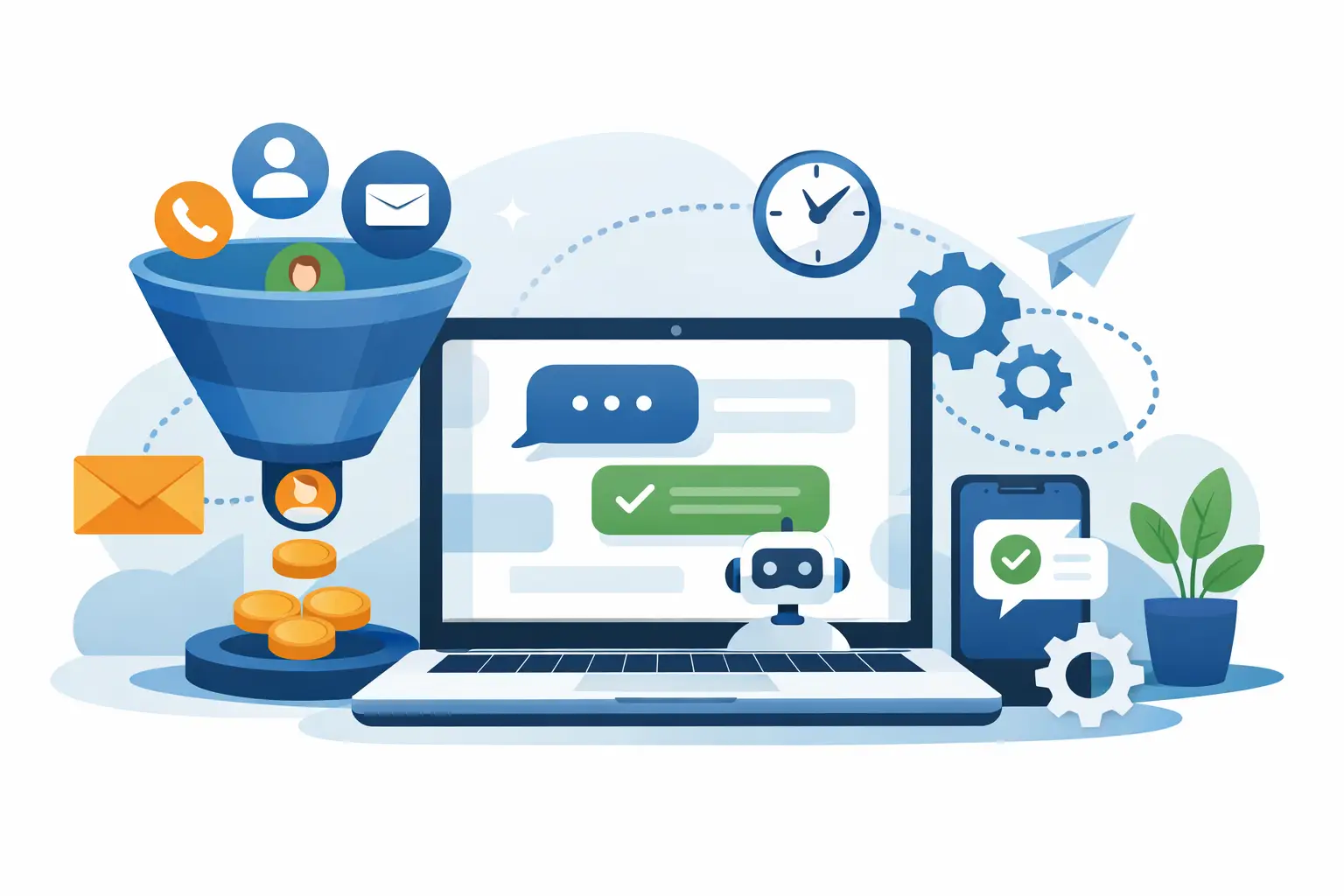
A new lead comes in at 2:17 p.m. You see it at 4:03. By then, they have already talked to two competitors, booked with one, and forgotten your name. That is exactly why lead response automation for small business is no longer optional for service businesses, sales teams, and owner-operators who live off inbound demand.
If your pipeline depends on calls, form fills, web chats, Facebook leads, or inbound texts, speed is not a nice extra. It is a sales advantage. The first business to respond usually gets the conversation. The business that waits gets compared on price, or ignored completely.
Why slow follow-up costs more than most owners realize
Most small businesses do not have a lead problem. They have a response problem.
The marketing works well enough to create interest. The real leak happens after the lead arrives. Someone is on a job. The front desk is busy. The owner plans to call back later. A rep forgets. A voicemail sits untouched. A web form email gets buried under everything else.
That delay is expensive because intent fades fast. A prospect filling out a quote request, asking for availability, or texting about pricing is not casually browsing. They are taking action. If they do not hear back quickly, they move on while their buying intent is still hot.
For small businesses, that creates a brutal math problem. You can keep spending more on ads, SEO, referral programs, and lead vendors, or you can fix the handoff after the lead comes in. In many cases, faster follow-up grows revenue more efficiently than buying more traffic.
What lead response automation for small business actually means
At a practical level, lead response automation for small business means every new inquiry gets an immediate, relevant response without waiting on a person to notice it first.
That response might be a text confirming receipt, asking a qualifying question, offering appointment times, or prompting the lead to reply with a specific detail. The goal is not to replace human selling. The goal is to start the conversation instantly, keep momentum, and make sure no lead dies in silence.
Good automation does three things well. First, it replies fast. Second, it routes attention to the right leads. Third, it helps the business continue the conversation without adding more admin work.
That is where many small teams get this wrong. They think automation means spammy drip campaigns or canned messages that feel robotic. It does not have to. The best setups feel responsive, clear, and useful. The lead gets help right away. Your team gets time back and more chances to close.
Speed matters, but relevance closes deals
An instant reply that says nothing useful is better than silence, but not by much.
If someone requests a roofing estimate, they do not want a vague "Thanks, we will be in touch." They want to know you saw the request and what happens next. If someone asks about mortgage options, they want a fast acknowledgment and a simple next step. If a med spa lead asks about availability, they want to know how to book or confirm openings.
That is why strong automation is built around the actual sales motion of the business. It should reflect how your leads buy, what they ask first, and what information helps move them forward.
For some businesses, the best first response is a text with two qualifying questions. For others, it is a booking prompt. For high-ticket or relationship-driven sales, it may be a fast acknowledgment followed by an alert to the owner or rep to take over personally. It depends on deal size, buying urgency, and how much explanation the customer needs before committing.
Where small businesses usually break the process
Most missed leads do not come from a lack of effort. They come from broken handoffs.
The inquiry hits one tool, notifications go somewhere else, and the reply happens from a personal phone if it happens at all. Notes live in a CRM that nobody updates consistently. Follow-ups depend on memory. Nobody knows which leads were contacted, which went cold, or which are still active.
This is especially common in small teams because everybody is doing multiple jobs. The same person handling sales is also handling operations, customer issues, and scheduling. Lead response gets pushed behind urgent tasks, even though it is one of the highest-value activities in the business.
Automation fixes that by turning response into a system instead of a habit. The lead comes in, the first message goes out, the record is created, the conversation stays in one place, and the team knows who needs attention next.
What a good setup looks like in the real world
A strong system does not need to be complicated. In fact, simpler is usually better for a small business.
A lead fills out a form, calls after hours, or sends a text. Within seconds, they receive a text back that sounds like a real business, not a bot farm. The message confirms the inquiry and asks one useful next-step question. If they reply, the conversation continues in the same thread. If they do not, the system can prompt a follow-up. If the lead looks high intent, the owner or salesperson gets notified immediately.
That is enough to create a major lift in speed-to-lead without forcing your team into a giant software project.
This is also why many small businesses do better with a focused conversion tool than a bloated all-in-one platform. A full CRM may offer everything on paper, but if setup takes months and nobody uses it properly, it does not solve the problem. The priority is getting to first response fast, then maintaining consistent follow-up.
Automation should support sales judgment, not replace it
There is a trade-off here. The more you automate, the more efficient the process becomes. But over-automation can flatten real sales opportunities.
If every lead gets the exact same sequence regardless of context, intent, or source, you risk sounding generic. That is a problem in categories where trust matters, such as financial services, real estate, recruiting, and healthcare-adjacent businesses.
The right balance is usually this: automate the first touch, automate reminders, automate lead organization, and use AI or templates to speed up follow-ups. But let a real person step in when the lead shows buying signals or asks nuanced questions.
That approach protects what matters most. You get speed at the top of the funnel without losing the human judgment that closes deals.
How to evaluate lead response automation for small business
Do not start by asking which platform has the most features. Start by asking where money is currently being lost.
If your biggest issue is after-hours inquiries, you need instant text response and mobile visibility. If your issue is inconsistent follow-up, you need reminders and suggested next actions. If your issue is poor organization, you need every inbound conversation tied to a lead record automatically. If your team is small and always moving, mobile-first matters more than complex desktop workflows.
You should also look at adoption risk. Small businesses do not need another tool that requires training sessions, migrations, and a consultant just to send a text. The best system is one your team can start using immediately, especially if you are trying to improve response times this week, not next quarter.
This is where a platform like Chesera fits naturally for lead-driven operators. It is built around the conversion moment itself - the inbound text, the fast reply, the lead record, the follow-up prompt, and the next best action - without forcing a small team into heavyweight software.
The businesses that benefit most
Any business that wins or loses based on response time can benefit, but the upside is especially strong when leads are high intent and easy to lose.
Think insurance agents responding to quote requests, contractors chasing estimate opportunities, med spas handling treatment inquiries, real estate agents fielding property questions, recruiters screening inbound candidates, and auto dealers responding to finance or inventory interest. In these categories, the lead is often talking to multiple providers at once. The business that responds first gets the best shot at controlling the conversation.
There is also a staffing angle. Automation often acts like an extra coordinator without adding payroll. For a lean team, that matters. You are not just saving time. You are reducing dropped revenue caused by delays, missed notifications, and inconsistent follow-up.
What happens after the first response matters just as much
A fast first message is the starting line, not the finish line.
You still need a system for re-engaging leads who go quiet, identifying who is most likely to convert, and keeping conversations moving without making the team manually chase every thread. That is where follow-up prompts, lead scoring, and AI-assisted drafts can help. They keep reps focused on the leads most likely to close instead of guessing who to contact next.
That matters because a surprising number of sales are not lost on the first missed reply. They are lost on the second or third gap, when nobody follows up and the lead assumes the business is disorganized or uninterested.
Small businesses do not need perfect automation. They need reliable speed, better consistency, and fewer dropped balls. If an automated response helps you start every conversation within seconds, keep hot leads organized, and follow up without fail, that is not a software upgrade. That is a revenue system.
The businesses that grow fastest are often not the ones with the biggest ad budgets. They are the ones that answer first and stay in the conversation long enough to win.